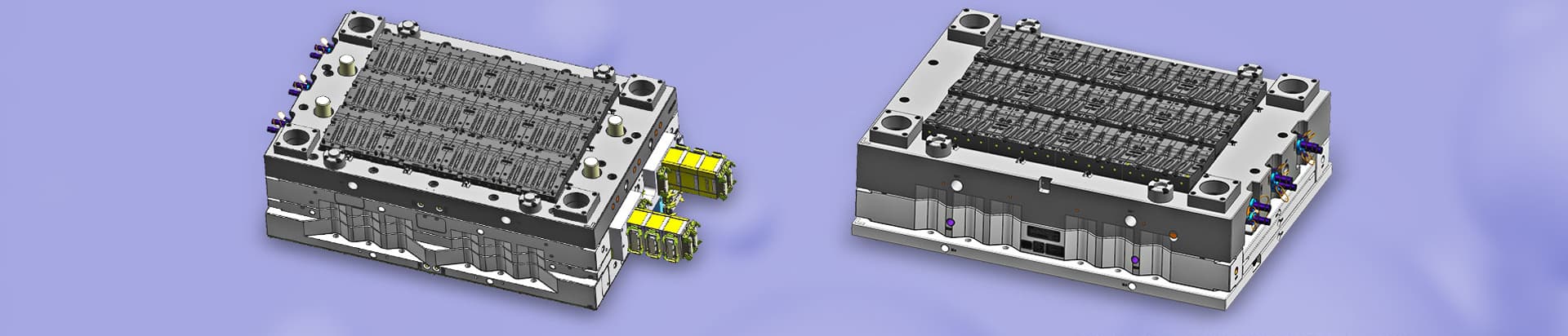
When developing plastic injection molds, design professionals need to fully evaluate the specific category and material properties of the resin applied in the production process. Among all plastic materials, thermoplastic engineering resins are the most widely utilized in modern injection molding operations. Seasoned mold designers take into account a full range of resin characteristics, including flexibility, fatigue resistance, shrinkage ratio, corrosion resistance, and thermal stability, along with surface requirements such as textured or high-gloss finishes.
When creating molds that satisfy part requirements, injection mold engineers must fully understand the elastic behavior of the resin and identify all critical design zones.
The shrinkage factor of the chosen resin is a critical parameter, since the mold cavity must be dimensionally adjusted to compensate for post-ejection shrinkage while maintaining precise part specifications. Cooling rate also plays an essential role in the molding cycle, as components must be fully hardened before ejection from the mold.
Certain thermoplastic resins offer exceptional corrosion resistance or high-temperature performance. Mold designers must account for these properties during the design phase, as the surface finish and quality of mold steel can directly influence part consistency and dimensional accuracy.
Mold flow analysis refers to computer-aided simulation technology that predicts material flow patterns and cavity filling based on material properties. This tool helps detect potential problem areas in the component design during early development stages. Identifying these issues in advance saves significant production time, prevents expensive manufacturing errors, and accelerates overall project delivery.
Although mold flow simulation is a highly effective resource, it cannot substitute for the specialized knowledge of veteran injection mold designers. Practical experience in developing molds for diverse thermoplastic resins and understanding their unique material behaviors represents irreplaceable professional expertise.




 Call us on:
  Email Us:
  1st Floor, Block1, No.3 Beiting Road, Houting Community, ShaJing Street, Bao'An District, Shenzhen City, Guangdong Province, China
  English
 Deutsch
 italiano
 русский
 français
 română
 العربية
 Español
 Polska
 日本語
日本語 한국어
한국어