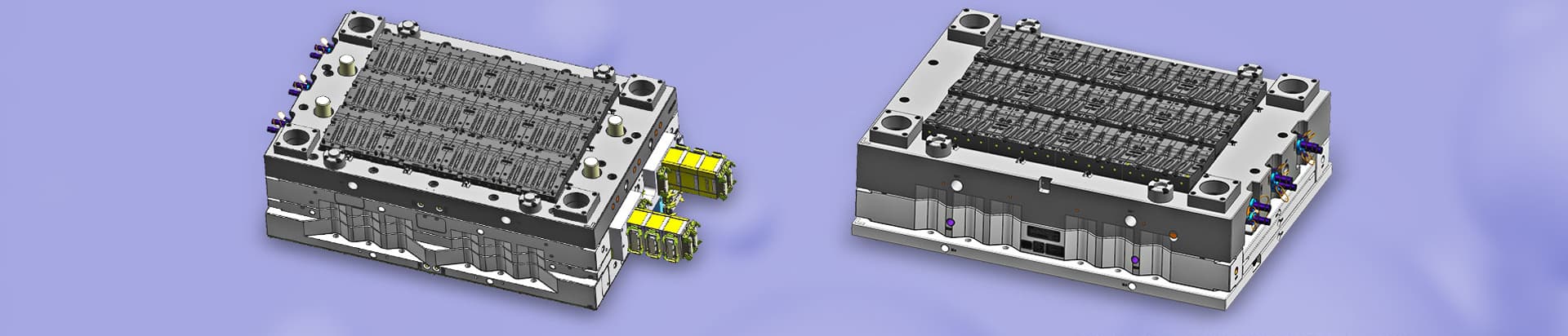
There are four ways to classify automotive moulds. According to the different processing methods of plastic parts, they can be divided into the following categories: injection molds, compression molds, injection molds, and extrusion molds.
When people talk about cars, the first thing that appears in front of them is the car's body, which represents the image and characteristics of a car. Therefore, automotive moulds, in a narrow sense, are the general term for all stamping product molds on the car body, that is, "stamping molds". For example, the top cover flanging die and so on. However, in a broad sense, "automotive mould" is the general term for the molds used to manufacture all parts of automotives. For example: automotive stamping molds, automotive forging molds, automotive casting wax molds, automotive injection molds, automotive glass molds and so on.
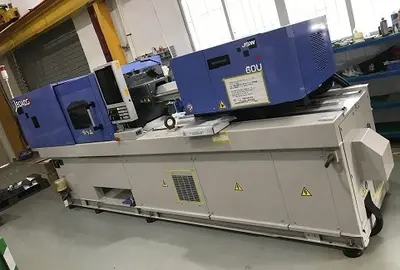
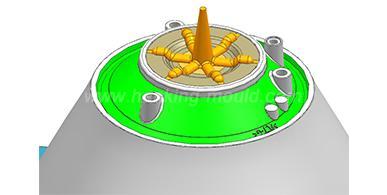
The characteristic of the molding process of the injection mold is that the plastic is placed in the heating barrel of the injection machine, and the plastic is heated and melted. Driven by the screw or plunger of the injection machine, it enters the injection mold cavity through the nozzle and the gating system of the mold. After that, the plastic is pressure-maintained, cooled and solidified in the mold cavity. Injection molding can not only mold plastic parts with complex shapes, but also has high production efficiency and good quality. Therefore, injection molding occupies a large proportion in the molding of plastic parts, and injection molding molds account for more than half of plastic molding molds.
Injection machines are mainly used for the molding of thermoplastics. In recent years, they have also been gradually used for the molding of thermoset plastics.


 Call us on:
  Email Us:
  1st Floor, Block1, No.3 Beiting Road, Houting Community, ShaJing Street, Bao'An District, Shenzhen City, Guangdong Province, China
  English
 Deutsch
 italiano
 русский
 français
 română
 العربية
 Español
 Polska
 日本語
日本語 한국어
한국어