Contact Us
Prototype Mold Background Technology

Prototype Mold Background Technology

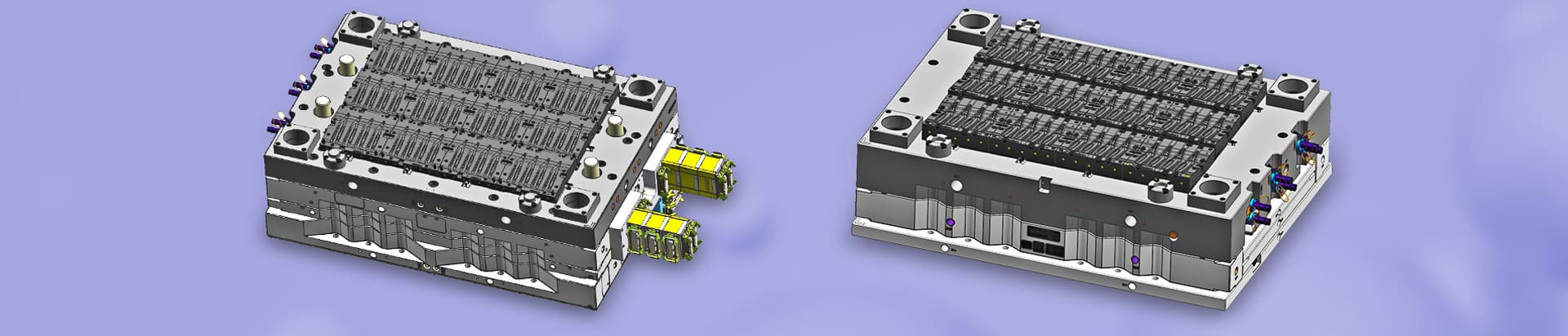
The mold refers to various molds and tools of the desired product, which are obtained by industrial injection molding, blow molding, extrusion, die casting or forging molding, smelting, stamping and other methods. In short, a mold is a tool used to make shaped items. This tool is composed of various parts, and different molds are composed of different parts. It mainly realizes the processing of the shape of the product through the change of the physical state of the formed material. It is known as the "Mother of Industry".


Before the formal opening of the mold, a set of prototype molds is often produced. Chinese manufacturer of prototype molds conducts a parameter test to verify the rationality of the number of cavities and the rationality of the cavity layout. At the same time, the defects of the design are exposed in the trial production, which is convenient to modify the design parameters when the mold is officially opened, so as to avoid that the processed mold cannot produce qualified products and cause huge losses. Especially for some molds with complex structure and high value, it is generally necessary to produce prototype molds first.


Compared with the formal mold, the prototype mold's Chinese producers need to be able to produce qualified products, and the cost needs to be much lower than the formal mold. The current approach is to use cheap materials when producing prototype molds, but the structure is not streamlined. Therefore, the cost during production is still relatively high, so now a prototype mold structure is needed to continue to reduce costs on the original basis.


The Latest Plastic Injection Molding Articles
  • Flow Marks on Plastic Molding Parts

    Flow Marks on Plastic Molding Parts

    November 19, 2025Flow Marks on Plastic Molding Parts: Causes and SolutionsFlow marks are wavy surface defects that appear near the gate of plastic molding parts. Characterized by concentric circular resin flow traces ...view
  • Cause Analysis of Silver Grain in Plastic Injection Products

    Cause Analysis of Silver Grain in Plastic Injection Products

    October 8, 2022Plastic injection molding products with silver grain, including surface air bubbles and internal pores. The main reason for the defects is the interference of gases (mainly water vapor, decomposition ...view
  • What is the structure of plastic injection mold?

    What is the structure of plastic injection mold?

    March 13, 2023Injection molding is a processing method used in mass production of plastic parts. The specific principle is to inject the heated plastic raw materials into the cavity of the plastic injection mold un...view
  • Heat Treatment of Plastic Injection Molding Products

    Heat Treatment of Plastic Injection Molding Products

    October 19, 2026Concept and function of plastic heat treatmentThe heat treatment of plastic products refers to the method of holding molded products at a certain temperature for a period of time to eliminate internal...view
  • What Are the Structural Design Requirements of Automobile Injection Moulds?

    What Are the Structural Design Requirements of Automobile Injection Moulds?

    December 17, 20201. Wall thickness requirements of automotive injection mould partsThe wall thickness has to be uniform, otherwise, the shrinkage of plastic materials will lead to uneven shrinkage, which may cause def...view
  • What is Overmolding?

    What is Overmolding?

    December 16, 2020Overmolding is a method of injection molding in which an additional layer of material is added to an existing part. Usually soft resin is wrapped on hard plastic, and hard plastic is also wrapped with...view
Plastic Injection Moulds
Plastic Parts Gallery