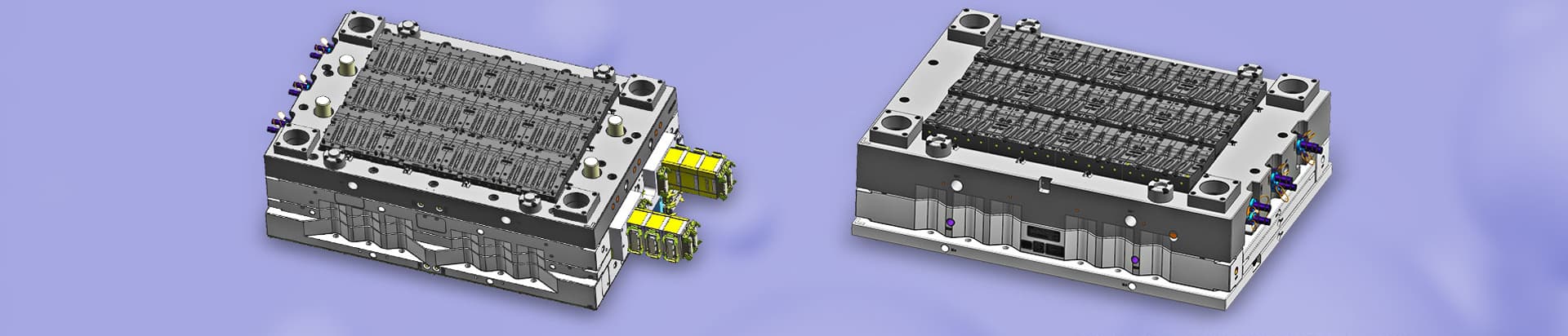
We possess extensive expertise in mold manufacturing and plastic injection molding, delivering distinct technological advantages across a diverse range of sectors. Beyond our strong capabilities in automotive components, consumer electronics, and related products, we also hold specialized technical strengths in the production of agricultural parts. With a loyal, long-term customer portfolio, our engineered solutions are fully capable of meeting a wide spectrum of customized client requirements—including resistance to harsh outdoor climatic conditions and consistent long-term performance stability.
The available surface finish options for injection-molded plastic parts vary significantly based on the part design and the chemical properties of the raw material. Identifying the most suitable surface finish for a component demands close collaboration between design engineers and injection molding specialists, to guarantee that the final part meets both aesthetic expectations and functional performance standards. Surface smoothness stands as a critical parameter influencing a product’s visual appeal and operational performance. Is smoothness the primary driver of a part’s aesthetic attractiveness, or does it serve purely as a functional design element?
The resolution of this question provides essential guidance for selecting the appropriate injection molding process and defining the precision machining procedures required for the parts. When choosing the surface finish for injection-molded components, these fundamental principles should be carefully evaluated.
Part designers often select textured finishes for a variety of aesthetic purposes. Texturing adds depth to components and finished products, effectively capturing customer attention and, in many cases, elevating the perceived value of the parts.
A key benefit of textured surfaces is their ability to conceal common manufacturing defects, including flow lines, weld lines, smudges, sink marks, and shadow marks. Additionally, textured finishes are highly resistant to contact damage during shipping and transportation, as well as fingerprint marks during handling and assembly.
Beyond aesthetic considerations, texturing offers a wide range of valuable functional advantages, such as:
• Creating undercut features: Textures applied to hidden surfaces can generate the necessary friction for components that cannot make direct contact with moving mold parts.
• Enhancing paint adhesion: Textured surfaces allow coatings and paints to bond more securely during secondary finishing processes.
• Improving grip performance: Textured components are easier to handle and grasp, boosting ergonomic usability and safety in specific applications.
• Strengthening label adhesion: Similar to paint, labels and stickers adhere more reliably to slightly textured plastic surfaces.
• Accelerating trapped gas venting: Textured mold cavities facilitate more efficient gas escape through the parting lines during the molding cycle.
• Eliminating flow creases: Increasing texture depth can eliminate flow lines, while also improving part strength, slip resistance, and overall safety.
By partnering with an experienced injection molding manufacturer like us, you will gain the technical insights needed to make informed decisions about surface finishes, aligned with your specific process parameters. Since surface finish selection directly impacts material choice, mold design, and other critical process decisions, it is vital to define these requirements early in the product design phase.
Steel molds offer the broadest selection of surface treatment methods. Steel can be precision-polished to achieve extremely smooth part surfaces. Common surface finishes for plastic injection-molded parts include sandblasting, chemical etching, matte finishes, leather grain textures, and custom geometric patterns.
Surface finish requirements must be integrated into the design process at an early stage, as the choice of material has a substantial impact on the optimal final surface quality. Specifically, gloss and roughness are affected by the base resin, additives, and processing parameters including fill rate, pressure, and temperature. Furthermore, working with injection molding facilities equipped with mold flow analysis software enables you to predict how material selection will influence surface smoothness and potential defects prior to full-scale production.
Material type is especially critical when a high-gloss finish is desired. Parts produced from crystalline resins require higher melt temperatures to maximize gloss and minimize roughness, achieving the desired smooth surface finish.
Incorporating additive compounds into base materials requires solid materials science knowledge. Certain additives must be avoided (or replaced with alternatives) depending on the target surface finish; for instance, some particulate fillers may increase surface roughness. Skilled design engineers understand how to select and combine compatible additives to create optimal formulations that enhance the final surface quality of molded parts.
Injection speed and processing temperature affect surface smoothness for multiple reasons. A combination of fast injection speeds and elevated melt or mold temperatures typically enhances the gloss and smoothness of the component surface. In practice, high injection speeds improve overall surface gloss and uniformity. Rapid cavity filling also reduces the visibility of weld lines, further improving the aesthetic quality of the finished part.
Defining the target surface smoothness for components is an essential step in the full product development lifecycle, requiring deliberate planning during the design phase to ensure the achievement of desired visual and functional results.



 Call us on:
  Email Us:
  1st Floor, Block1, No.3 Beiting Road, Houting Community, ShaJing Street, Bao'An District, Shenzhen City, Guangdong Province, China
  English
 Deutsch
 italiano
 русский
 français
 română
 العربية
 Español
 Polska
 日本語
日本語 한국어
한국어