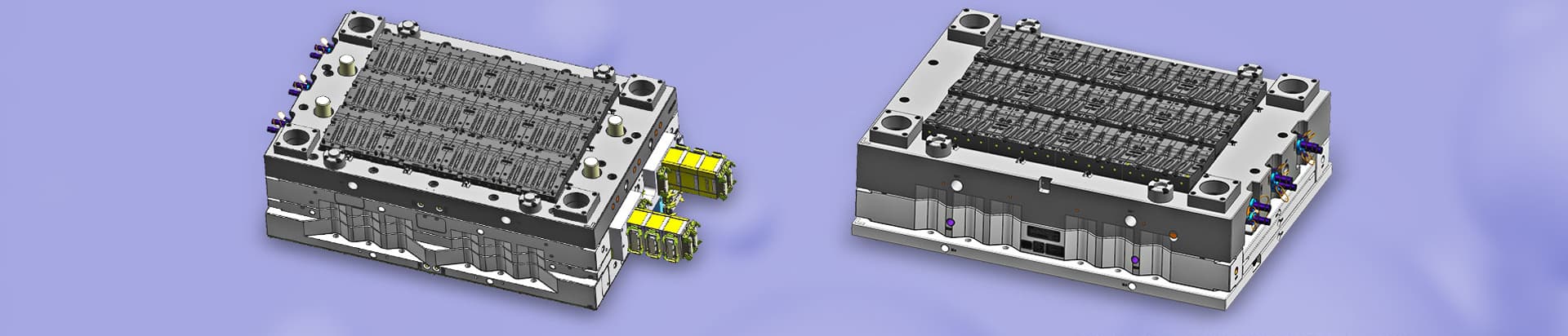
Mold temperature stands as one of the most critical parameters in injection molding, directly governing melt flow behavior, cooling rate, crystallization level, and internal stress of plastic materials. These factors ultimately determine part dimensional accuracy, surface gloss, warpage control, and mechanical performance. Inaccurate or uneven mold temperature control will directly lead to common quality defects such as sink marks, warping, weld lines, cracking, and out-of-tolerance dimensions. To achieve stable, efficient, and high-quality injection production, systematic, precise, and uniform mold temperature control is essential.
During the production of plastic components, mold design and manufacturing are critical, but strict control over the injection molding process is equally important, as it directly impacts final part quality. Adjusting injection molding machine parameters based on specific material characteristics is a complex procedure that requires deep understanding of material properties and processing requirements. Below are key guidelines for setting machine parameters according to different material behaviors:
1. Melt Temperature Settings
For thermoplastic elastomers such as TPE, the recommended melt temperature ranges from 150°C to 250°C, with exact values determined by material supplier specifications and practical production experience.
2. Injection Pressure Settings
Injection pressure controls the filling completeness and packing density of plastic inside the mold cavity. For TPE materials, typical injection pressure ranges from 30 to 100 MPa, adjusted based on mold design, part geometry, and injection speed.
3. Injection Speed Settings
Injection speed directly affects filling efficiency and melt distribution. For TPE materials, a fast‑to‑slow profile is recommended: fill the runner system rapidly, then reduce speed as material enters the cavity through the gate.
4. Mold Temperature Settings
Mold temperature influences surface finish and cooling efficiency. Higher temperatures produce smoother surfaces, while lower temperatures accelerate solidification and shorten cycle time.
5. Cooling Time Adjustment
Cooling time determines how long the plastic solidifies before ejection. Short cooling times apply to simple, thin‑walled parts that cool quickly. Longer cooling is required for thick sections, enclosed structures, and parts with low heat dissipation.
6. Back Pressure Settings
Back pressure affects shear heating and melt homogeneity, but excessive levels may cause thermal degradation. Screw speed and back pressure must be balanced to achieve optimal melt quality and molding stability.
7. Material Drying Process
Hygroscopic materials such as PA6 and PA66 require pre‑drying before processing to prevent defects such as bubbles and silver streaks.
8. Material Flow Considerations
High‑viscosity, low‑flow materials including PC, PMMA, and PA66 require higher processing temperatures. Heat‑sensitive materials such as PVC and POM demand strict temperature control below their thermal decomposition point.
9. Matching Material Properties to Processing Parameters
Every plastic resin exhibits unique processing characteristics, which form the foundation for establishing stable and reliable injection conditions.
10. Environmental and Sustainability Factors
For sustainable production, eco‑friendly or recyclable materials such as biodegradable plastics or low‑carbon‑footprint resins can be selected.



 Call us on:
  Email Us:
  1st Floor, Block1, No.3 Beiting Road, Houting Community, ShaJing Street, Bao'An District, Shenzhen City, Guangdong Province, China
  English
 Deutsch
 italiano
 русский
 français
 română
 العربية
 Español
 Polska
 日本語
日本語 한국어
한국어