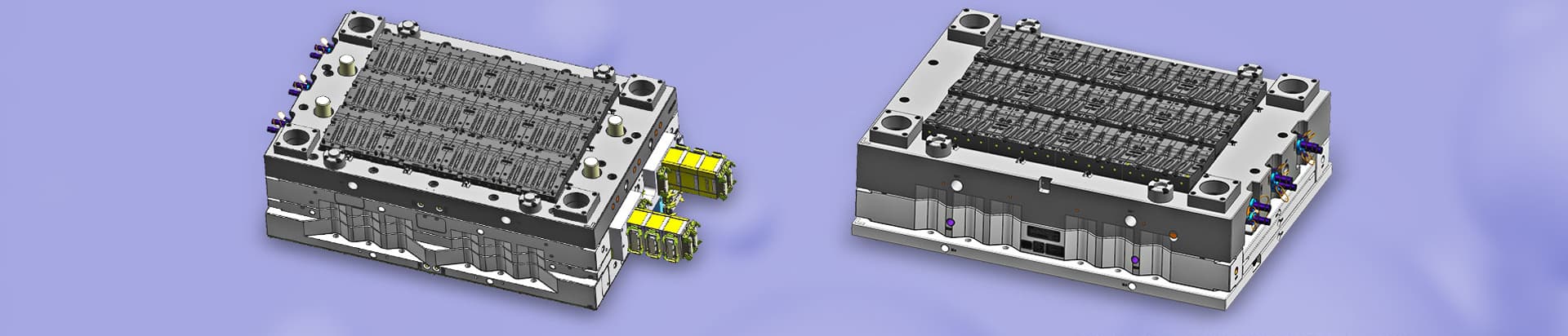
Many times, the draft angle may create conflicts of interest. For injection molding manufacturers, their focus is on molding and they hope to have a greater draft angle; For mold processing manufacturers, it has been found that machining angles on all cavity and core surfaces is a challenging task. Simple features only require simple machining equipment and lower processing costs, and after demolding, CNC or even EDM is required; For product designers, the draft angle may complicate the part design and the appearance may also change due to the draft angle.
However, regardless of which party, it is crucial to ensure that the molded parts meet the required quality standards. If there is no draft angle, you will increase the chance of injection molding problems. This may unnecessarily increase production costs and delivery time.
In addition to the convenience of removing parts from the mold mentioned above, the draft angle also has the following benefits:
Reduce the possibility of damaging the surface of parts due to friction during the ejection process;
Ensure the uniformity and integrity of other surface textures and finishes;
Minimize the deformation of parts caused by uneven ejection to the greatest extent possible;
Reduce the wear of molded parts and minimize the chance of damaging molds;
Shorten overall cooling time by eliminating or reducing the need for complex ejection settings;
Directly and indirectly reduce overall injection molding production costs.
The design shall satisfy the following requirements:
Ensure the requirements for mold production
Ensure structural functionality
Ensure appearance requirements
After the mold is opened, the plastic parts need to be left on one side of the mold core side to facilitate the final ejection.
The removal of plastic parts from the mold requires two steps:
Firstly, the outer surface of the plastic part separates from the mold cavity wall. This step usually does not require additional auxiliary separation structures in the mold, so the friction between the outer surface of the plastic part and the cavity wall should be minimized as much as possible.
Then, the inner surface of the plastic part separates from the core wall of the mold core. In this step, the mold generally uses auxiliary ejection structures such as ejector pins, inclined ejector pins, or push plates. The frictional force between the inner surface of the plastic part and the core should be greater than the frictional force between the outer surface of the plastic part and the cavity wall to ensure that the plastic part remains on the core mold side during the mold opening process.
Due to the tendency of plastic to shrink towards the mold core (i.e., high shrinkage stress), when the roughness and draft angle are constant, the friction between the inner surface of the plastic part and the core will be greater than the friction between the outer surface of the plastic part and the cavity wall. At the same time, the ejection mechanism of the mold is usually located on the mold core side. Therefore, in general, the core is designed on the mold core and the cavity is designed on the mold cavity, that is, the complex side of the plastic part is designed on the mold core side and the relatively simple side (appearance) is designed on the mold cavity.


 Call us on:
  Email Us:
  1st Floor, Block1, No.3 Beiting Road, Houting Community, ShaJing Street, Bao'An District, Shenzhen City, Guangdong Province, China
  English
 Deutsch
 italiano
 русский
 français
 română
 العربية
 Español
 Polska
 日本語
日本語 한국어
한국어