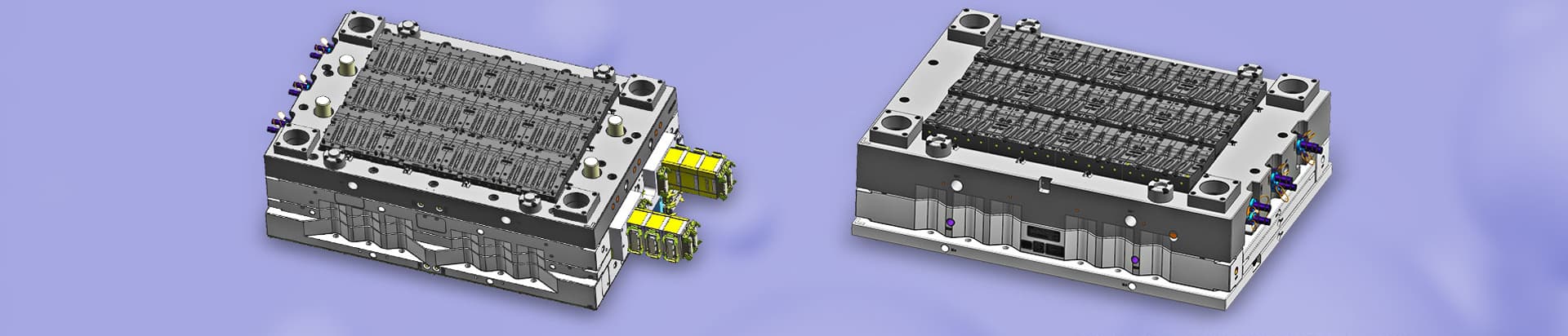
Short-Shot in Injection Molding: Causes, Relevant Knowledge and Solutions
1. Causes of Injection Molding Short-Shot
Molding machine parameter issues: Insufficient pressure of the injection molding machine or too short injection time, failing to push the material to fully fill the cavity.
Mold pressure loss: Excessive pressure loss inside the mold during the injection cycle leads to insufficient pressure in the cavity and incomplete material filling.
Poor material fluidity: The injection material itself has insufficient fluidity, making it difficult to fill the cavity under the established conditions.
Poor ventilation: Air in the cavity cannot escape smoothly, forming air resistance that hinders material filling.
Gate design issues: In multi-cavity molds, the gate distribution is unbalanced, resulting in insufficient material supply to some cavities.
2. Relevant Knowledge about Injection Molding Short-Shot
2.1 Core Influencing Factors of Short-Shot
The occurrence of short-shot is usually directly related to the mold shape and material fluidity. When short-shot is caused by improper setting of molding conditions, parameters should be adjusted to optimize material fluidity, including increasing mold temperature, barrel temperature, injection speed and injection pressure.
2.2 Importance of Ventilation Design
If the ventilation design in the mold cavity is unreasonable, air will be difficult to escape. This will not only cause short-shot but also lead to quality defects such as dark spots and weld lines on the product, affecting the appearance and performance of the plastic molding product.
3. Solutions to Injection Molding Short-Shot
3.1 Immediate Solutions
Improve short-shot through rapid parameter adjustment and simple treatment, including: increasing mold and barrel temperature; increasing injection pressure; opening air escape grooves with a depth of 0.02~0.04mm and a width of 5~10mm on the mold parting surface to accelerate air discharge.
3.2 Short-Term Optimization Solutions
Improve the local mold structure to enhance material supply and ventilation capacity: increase the size of gates and runners; in multi-cavity molds, expand the gate of the cavity with short-shot separately; adjust runner configuration and add air escape pins; improve the smoothness of the mold surface to reduce material flow resistance.
3.3 Long-Term Radical Strategies
Solve the problem from the source of product design and material selection: optimize the product structure to avoid excessive thickness differences; add gates in the thicker areas of the product to ensure full material filling; combined with the product application scenario, prioritize injection materials with excellent fluidity on the premise of meeting performance requirements.
4. Impact of Material Differences on Short-Shot and Countermeasures
The fluidity of some resins will decrease significantly when the mold temperature is low, which can easily cause short-shot. Such materials include polycarbonate (PC), polyphenylene oxide (PPO), polyethylene terephthalate (commonly known as polyester resin, PETP), etc. For such materials, a mold temperature controller must be used to heat the mold temperature to above 80℃ to ensure sufficient fluidity for filling.
5. Reference: Material Fluidity and Measurement
5.1 Definition of Material Fluidity
Material fluidity usually refers to the weight of the material flowing into the injection hole within a specified time under specific temperature and pressure conditions. Indicators for measuring material fluidity include the material's melt index (MI).
5.2 Measurement Method and Result Analysis of Resin Fluidity
A spiral flow mold is commonly used to measure resin fluidity. The fluidity of the resin is evaluated by measuring the filling length of the resin in the mold. Based on the measurement process and results, the following conclusions can be drawn:
5.2.1 Impact of Molding Parameters on Filling Length
Injection holding time: After exceeding a certain duration, the holding time has no correlation with the filling length; but too short holding time will directly lead to insufficient filling (short-shot).
Barrel residence time: The residence time of the material in the barrel has no obvious correlation with the filling length.
Injection speed: Too slow speed will lead to insufficient filling; but after exceeding a certain value, the impact of injection speed on the filling length is minimal.
Mold temperature: Higher mold temperature is more conducive to filling, and its impact on the filling length is relatively small.
Screw plasticizing stroke: If there is a slight surplus in the stroke, the filling length will become longer accordingly.
Injection pressure: It has an approximately linear positive correlation with the filling length.
Material temperature: Within the suitable molding temperature range, the material temperature and filling length are approximately in a linear proportional relationship.
5.2.2 Impact of Mold Structure on Filling Length
The cavity thickness and filling length are approximately in a linear proportional relationship. The larger the cavity thickness, the smoother the material filling and the longer the filling length from injection mold process.



 Call us on:
  Email Us:
  1st Floor, Block1, No.3 Beiting Road, Houting Community, ShaJing Street, Bao'An District, Shenzhen City, Guangdong Province, China
  English
 Deutsch
 italiano
 русский
 français
 română
 العربية
 Español
 Polska
 日本語
日本語 한국어
한국어